Shortcut (formerly Clubhouse)
8/2/2026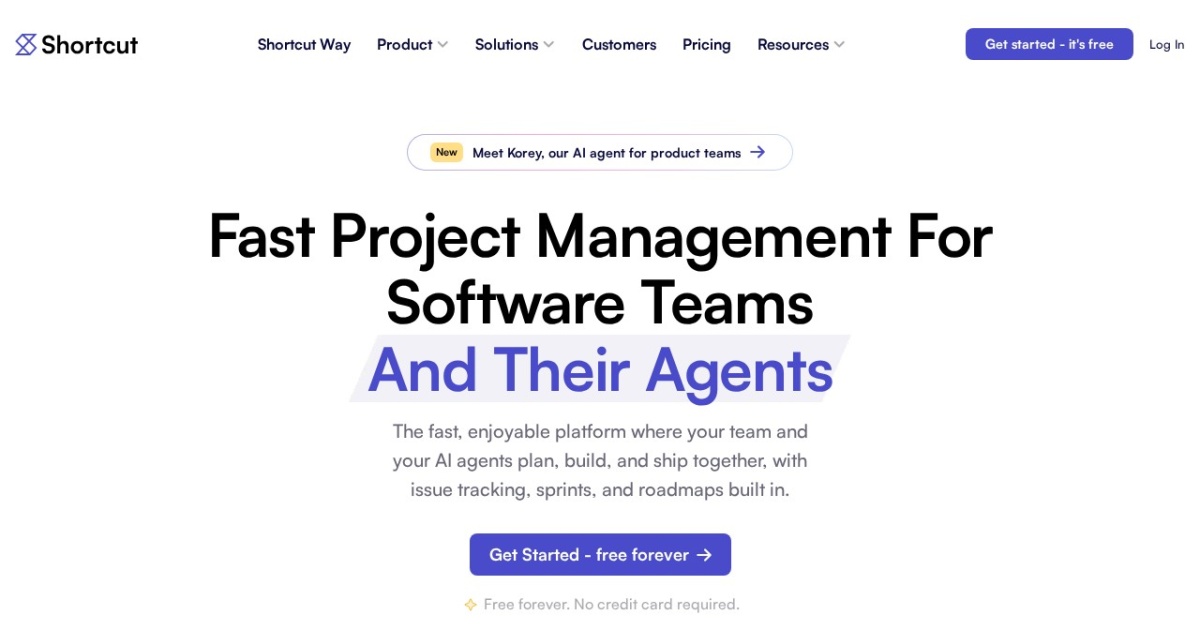
The landing page is a weekend Astro build; the actual product is a decade-old, VC-funded project management platform that a prompt cannot conjure into existence.
You can clone the pretty landing page in an afternoon, but not 12 years of product depth, $40M+ in funding, and an established base of paying engineering teams.
Not worth cloning as a full product — the backend is a multi-year, funded engineering effort (real-time collaborative issue tracker, integrations, API, billing) that no prompt sequence reproduces; the landing page alone is trivial but has zero standalone value without the underlying app.
Large, established project-management/issue-tracking market with strong incumbents; Shortcut carved a niche as the "middle ground" between Linear's simplicity and Jira's complexity, generating roughly $21M ARR.
$500–5,000+ (scales with users/DB/real-time infra, plus Segment/HubSpot/analytics SaaS fees)
A clone could only monetize by re-selling seats in an already crowded, price-competitive market (~$8-10/user/mo) dominated by Linear and Jira; margins would be thin unless it found a genuinely differentiated wedge (e.g., AI-agent-native workflows).
Linear, Jira (Atlassian), Monday.com, ClickUp, Asana, Plane (open-source), Azure DevOps
Seat-based SaaS subscription — Free/Team/Business/Enterprise tiers around $8.50-$10/user/month, plus enterprise sales/custom pricing.
Mid-size B2B SaaS traffic (est. hundreds of thousands of visits/mo); company reports ~73-80 employees and ~$21M ARR, flat-to-steady rather than hypergrowth.
- Trademark/brand (Shortcut name, logo)
- Competing against well-funded incumbents (Linear, Atlassian) in saturated market
- Third-party integration agreements (GitHub, GitLab, Slack, Figma) not trivially replicable
- Public API surface implies contractual/versioning commitments for any real clone
Next.js/Astro (marketing) + separate app on React + Node/GraphQL API + Postgres (Supabase/Neon) + Redis for realtime + Clerk/Auth0 for auth + Stripe for billing + Vercel/Fly.io hosting
Vercel's 'Linear clone' open-source starters or Plane (open-source Linear-alike) as a base for the app; Astro marketing starter for the landing page
- 1.Fork an Astro/Next marketing template and rebuild the landing/press/branding pages with Tailwind + CMS-driven content
- 2.Stand up Postgres schema for orgs, users, stories, epics, sprints, roadmaps, boards with row-level multi-tenancy
- 3.Build REST/GraphQL API layer mirroring developer.shortcut.com/api/rest/v3 endpoints for stories/epics/workflows
- 4.Add auth (session cookies + SSO/SAML for enterprise) and an is-authenticated check like the one observed
- 5.Wire up Stripe subscription billing with seat-based tiers (Free/Team/Business/Enterprise)
- 6.Integrate GitHub/GitLab/Slack/Figma webhooks for commit/PR syncing
- 7.Add realtime layer (WebSockets/Pusher) for live board updates, then bolt on Segment/GTM/HubSpot analytics for parity
▸Technical evidencefacade · hidden · 6 signals · DR 73ShowHide
A prompt tool can trivially clone the marketing site — hero copy, feature grids, pricing tables, press/branding pages — using Astro/Next + Tailwind and stock illustrations in an afternoon.
Behind the marketing shell sits a full multi-tenant SaaS: a REST/GraphQL API (developer.shortcut.com/api/rest/v3), session-based auth (/api/private/user/is-authenticated), a real-time collaborative issue-tracking DB (stories, epics, sprints, roadmaps, boards), Git/GitHub/GitLab/Slack/Figma integrations, billing/subscription tiers, and an analytics/CRM/consent stack (Segment, GTM, HubSpot, Ketch).
Clonable and beatable — the fun kind.
Get the full build plan →