LaunchDarkly
7/26/2026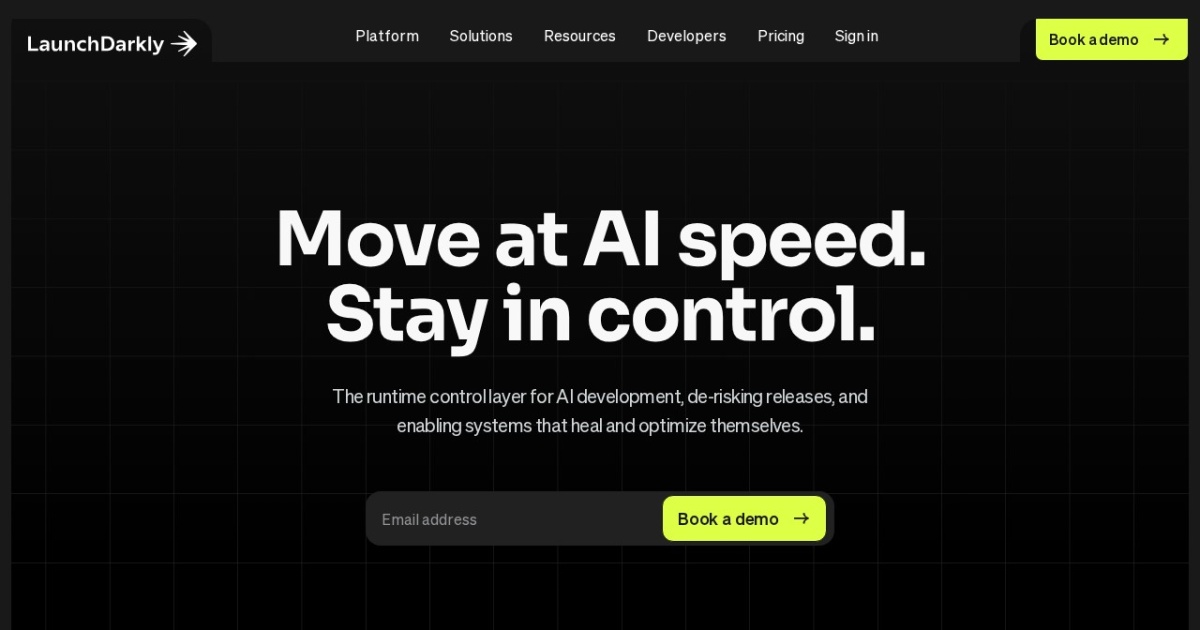
You can clone the pretty brochure in a weekend; you cannot clone the real-time flag-evaluation engine serving 25 billion evaluations a day that took a decade and $330M to build.
The landing page is a weekend clone; the moat is a decade of enterprise trust, 5,500+ customers including a quarter of the Fortune 500, and switching costs baked into every microservice that calls its SDK.
Not worth it as a business clone — the visible site is trivial to replicate but worthless without the product; the real platform represents years of distributed-systems engineering and $330M+ in capital, competing in a market already crowded with cheaper open-source alternatives (Flagsmith, Unleash, ConfigCat). Only rebuild the landing page if the goal is a portfolio/demo piece, not a business.
Feature-flag/experimentation management is a mature, competitive category with real enterprise demand — LaunchDarkly itself is reported around $60M ARR, a $3B valuation, and serves over 5,500 customers, roughly 25% of the Fortune 500.
$50–300 for a landing-page clone (Vercel + Prismic + Segment free tiers); realistically $50k+/mo at scale to run a real flag-evaluation backend with global edge streaming
A cloned landing page alone generates no revenue; monetizing would require rebuilding the actual flag-management product and competing against well-funded, entrenched incumbents in a crowded, price-sensitive market where open-source alternatives already undercut on cost.
Split.io, Unleash, Flagsmith, Statsig, ConfigCat, Optimizely, Harness, PostHog, GrowthBook, FeatBit
Enterprise SaaS: freemium Developer tier, then per-MAU/service-connection paid tiers (Pro ~$10/seat plus usage), with custom Enterprise contracts typically $25k–$200k+/year for large orgs.
Large B2B SaaS site; enterprise-focused traffic, likely hundreds of thousands of monthly visits driven by SEO/content marketing and sales-led demand, trend stable/growing given continued funding rounds and product expansion (AI Configs, observability).
- Trademark/brand (LaunchDarkly name and assets)
- Prismic CMS content is proprietary/copyrighted marketing copy
- No meaningful risk in cloning the facade itself, but competing commercially would face entrenched enterprise contracts and switching costs
Next.js (App Router) + Prismic (or Sanity) headless CMS for content + Segment for analytics + Vercel hosting; skip real backend entirely for a facade clone
Vercel's Next.js + Prismic starter template
- 1.Scaffold Next.js app with App Router and Tailwind for styling to match the visual design system
- 2.Wire up a headless CMS (Prismic/Sanity) to manage hero sections, feature pages, and blog-style content blocks so marketing can edit copy
- 3.Rebuild key routes as static/SSR pages: /platform/code-control, /platform/agent-control, /how-it-works/* using shared section components
- 4.Add a demo-request form posting to a simple serverless function or CRM webhook (HubSpot/Marketo) instead of building real CRM
- 5.Integrate Segment snippet + GTM for analytics parity, and Cookiebot for consent banners
- 6.Deploy to Vercel with image optimization; add sitemap/SEO meta tags matching the original
- 7.(Stop here for facade) — real product would require a separate multi-year effort: flag evaluation SDKs, streaming infra, RBAC/SSO, experimentation stats engine, billing by MAU
▸Technical evidencefacade · hidden · 8 signals · DR 79ShowHide
A prompt can recreate the Next.js marketing site — hero sections, feature pages (code-control, agent-control), pricing/demo-request forms, and Prismic-driven CMS content blocks — in an afternoon.
Behind the marketing shell sits a decade-old, multi-region SaaS platform: real-time flag evaluation streaming infrastructure serving 25B+ flag evaluations/day, 30+ language SDKs, enterprise SSO/RBAC, audit logging, experimentation statistics engine, an acquired observability product (Highlight.io), and billing/usage metering by MAU — none of which is visible or reproducible from the crawled HTML/JS.
You could build it — but that moat means you can't win. Find a better bet.
Analyze a different idea →