WorkOS
7/27/2026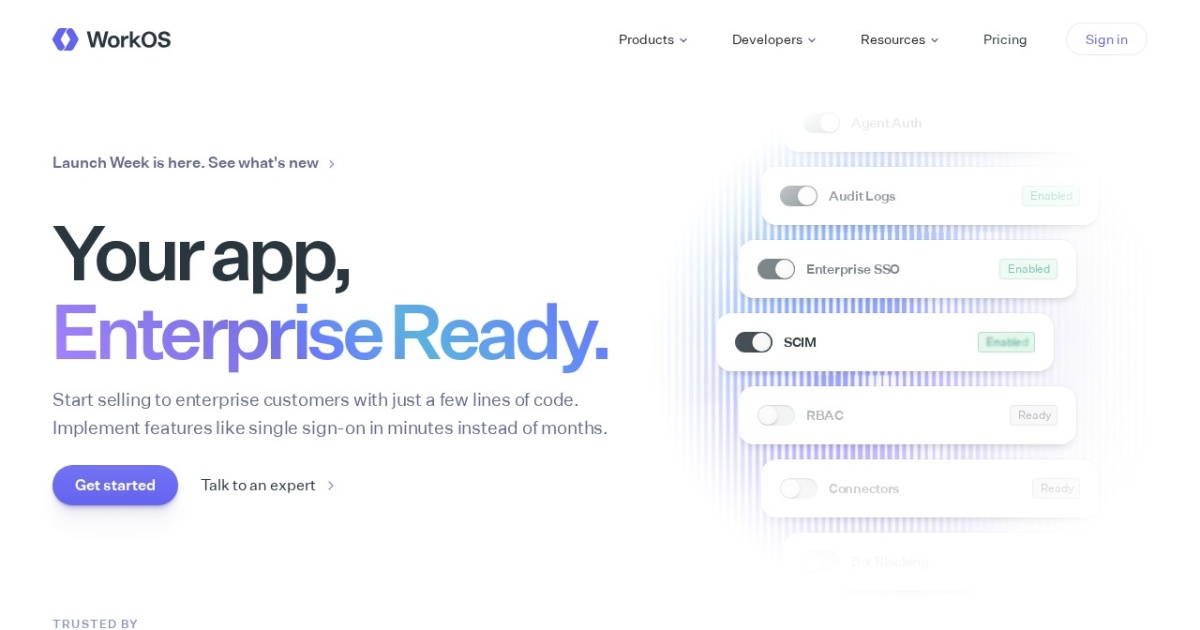
You can clone the pretty Webflow shell in a weekend, but WorkOS's actual product is a compliance-grade identity broker that took years and serious protocol expertise to build.
Anyone can clone the landing page copy; nobody can clone the SOC2-audited, multi-IdP-certified identity infrastructure trusted by companies like OpenAI, Vercel, and Cursor for their most security-sensitive login flows.
Not worth cloning as a full business — the landing page is trivial but the real product (protocol-correct SSO/SCIM, audit logs, compliance certs) is a multi-year engineering and trust-building effort competing against well-funded incumbents; only worth it if you're targeting a narrow niche Auth0/WorkOS underserve, not a straight clone.
Enterprise identity/CIAM is a large, growing market as every B2B SaaS eventually needs SSO/SCIM to close enterprise deals; incumbents include Auth0/Okta, with WorkOS positioned as the modern challenger.
$500–5,000+ (hosting, KMS/HSM for crypto keys, IdP test accounts, compliance tooling) just to run a minimal viable clone, scaling fast with customers
Real revenue would come from usage-based connection fees (WorkOS itself charges $125 per connection per month for SSO, with Directory Sync priced identically), but profitability requires winning enterprise trust — a multi-year sales and compliance process, not a clonable weekend product.
Auth0 (Okta), Clerk, Stytch, SSOJet, Scalekit, FusionAuth, Frontegg
Usage/connection-based B2B pricing: free tier up to 1M MAU for core auth (AuthKit), then paid per SSO/SCIM connection (~$125/mo each) plus add-ons like audit logs and custom domains, scaling to enterprise contracts.
Large and growing developer-tool audience; WorkOS is widely cited as a fast-rising Auth0 alternative among B2B SaaS and AI-native startups.
- Regulated/compliance-sensitive space (SOC2, HIPAA, GDPR)
- Handling customer identity/credentials carries high liability
- Competing against well-capitalized incumbents (Okta/Auth0)
- Enterprise sales cycles require trust/certifications a clone won't have
Next.js (marketing site) + Node/Go backend + Postgres + Redis + a dedicated SAML/OIDC library (e.g. node-saml, ory/fosite) + Stripe for connection billing + Vercel/Fly.io hosting + Auth0/WorkOS-style KMS for cert signing
Webflow-to-Next migration starter or a Tailwind SaaS landing template for the front end; for backend, fork an open-source IdP toolkit like Ory Kratos/Hydra or boxyhq/jackson (SAML jackson) as the SSO connector base
- 1.Rebuild the marketing site with Next.js + Tailwind, matching the hero, product tiles, and code-snippet sections
- 2.Stand up Postgres multi-tenant schema (organizations, connections, users, audit_logs)
- 3.Integrate an open-source SAML/OIDC broker (e.g. BoxyHQ Jackson) to handle IdP-agnostic SSO instead of writing protocol code from scratch
- 4.Add SCIM endpoint support for directory sync using a SCIM server library
- 5.Build an Admin Portal subdomain for customer IT admins to self-configure SSO/SCIM
- 6.Layer on RBAC and audit-log storage/query API, plus Stripe metering for per-connection billing
- 7.Pursue SOC2 Type II before pitching any real enterprise customer, since this is the actual moat
▸Technical evidencefacade · hidden · 6 signals · DR 82ShowHide
A prompt tool can nail the Webflow-style marketing site — hero copy, feature tiles, code-snippet cards, testimonial carousels, pricing tables — since it's built on Webflow CDN assets with fairly standard animation/scroll patterns.
Behind the marketing shell sits a full enterprise identity platform: SAML/OIDC SSO brokering across dozens of IdPs, SCIM directory sync, MFA, RBAC, audit-log/Radar bot & fraud detection, an Admin Portal, secrets Vault, and MCP auth — each requiring real cryptographic protocol handling, multi-tenant data isolation, and compliance (SOC2/HIPAA) that no amount of prompting reproduces.
You could build it — but that moat means you can't win. Find a better bet.
Analyze a different idea →