How is Loom (loom.com) built — and could you clone it?
Last analyzed 7/12/2026 · full report
https://loom.com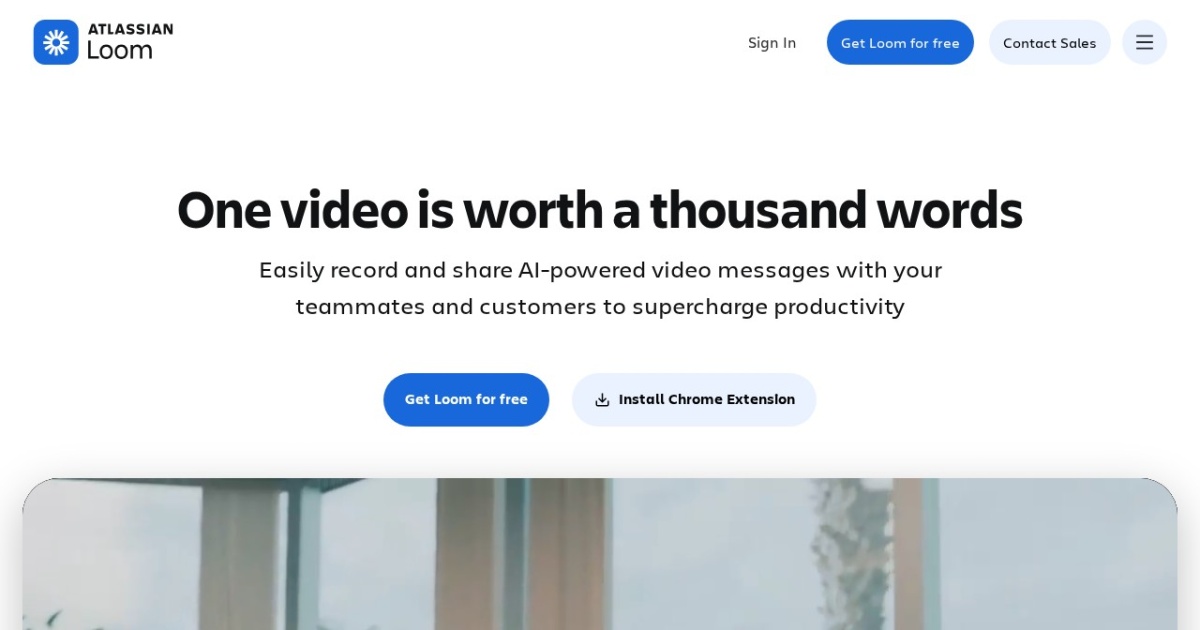
You can clone the landing page over a weekend; you cannot clone a decade-old video infrastructure company that Atlassian just paid $975M for.
The landing page is a weekend clone; the 22M-user base, video-processing infrastructure, and $975M Atlassian backing are not.
Not worth cloning as a direct Loom replica — the market is saturated with well-capitalized incumbents and free open-source options, and the real product (reliable cross-platform recording + video infra + AI) is a multi-year engineering effort, not a prompt-able weekend project. A narrow niche wedge (e.g., a specific AI-editing feature) might be worth building standalone, but not the full platform.
Massive, mature async-video/screen-recording market with heavy competition (Loom itself has ~22M+ users and was acquired by Atlassian for $975M); the space is crowded with well-funded and open-source alternatives, and growth is being driven now by AI editing/summarization features.
$500–5,000+ (video storage/CDN, transcoding compute, AI transcription API calls, auth/CRM tooling) scaling steeply with usage
A clone could monetize via per-seat SaaS subscriptions like Loom's own model, but video storage/transcoding/AI costs scale directly with usage, and competing against a free/generous-tier crowded market (Tella, ScreenPal, Vidyard) makes margins thin without a strong differentiator.
Tella, Vidyard, ScreenPal, Camtasia, Panopto, Zight (CloudApp), Screencastify, Claap, OBS Studio, Bandicam
Freemium per-seat SaaS: free Starter tier (capped recordings/length) → paid Business (~$15-18/user/mo) and Business+AI (~$20-24/user/mo) → custom Enterprise pricing, now billed and bundled through Atlassian's platform post-acquisition.
Tens of millions of registered users (22M+ historically cited) and high organic/brand search traffic; likely flat-to-declining organic growth post-Atlassian pricing changes as users explore alternatives.
- Loom/Atlassian trademark and brand protection
- OpenAI sub-processor data-sharing terms to replicate legally
- GDPR/enterprise compliance (SSO, data retention) expectations if targeting business customers
- Crowded market with well-funded incumbents and free open-source alternatives
Next.js (marketing site) + Supabase/Postgres (auth, users, workspaces) + Mux or Cloudflare Stream (video ingest/transcode/CDN) + AWS S3 (storage) + OpenAI Whisper/GPT API (transcription/summaries) + Stripe (billing) + Vercel (hosting)
Next.js SaaS Starter (Vercel) combined with a Mux video-upload demo template
- 1.Fork a Next.js + Tailwind marketing starter and rebuild the landing/use-case pages (hero, testimonials, pricing) from the crawled HTML structure
- 2.Build a browser recording client using MediaRecorder/WebRTC APIs for screen+webcam+mic capture, uploading chunks directly to Mux/Cloudflare Stream
- 3.Stand up Postgres schema for users, workspaces, videos, comments, and viewer analytics; add Supabase auth with SSO/SCIM stubs for 'enterprise' tier
- 4.Wire an AI pipeline: send audio to Whisper for transcription, then GPT for auto-titles/summaries/chapters, store results linked to each video
- 5.Integrate Stripe for per-seat subscription billing with tiered plans (Starter/Business/Business+AI/Enterprise) matching the crawled pricing routes
- 6.Add CRM/marketing hooks (e.g. HubSpot) for lead capture on use-case pages, plus Intercom-style chat widget
- 7.Deploy on Vercel with Cloudflare CDN in front of video assets; add basic admin dashboard for workspace management
▸Technical evidencefacade · hidden · 9 signals · DR 91ShowHide
A prompt can nail the marketing shell — Next.js pages, hero copy, use-case landers (/screen-recorder, /use-case/sales, /use-case/engineering) — with Tailwind-style layouts, testimonial carousels, and pricing tables.
Behind the marketing pages sits a full video platform: native desktop/browser screen+webcam recording clients, video transcoding/storage/CDN delivery, AI transcription/summarization pipelines (OpenAI integration), viewer analytics, CRM/marketing automation (Marketo/Munchkin), enterprise SSO/SCIM security (Atlassian Guard), and billing/seat management now merged into Atlassian's identity and billing systems.
You could build it — but that moat means you can't win. Find a better bet.
Analyze a different idea →