How is lemlist built — and could you clone it?
Last analyzed 7/21/2026 · full report
https://lemlist.com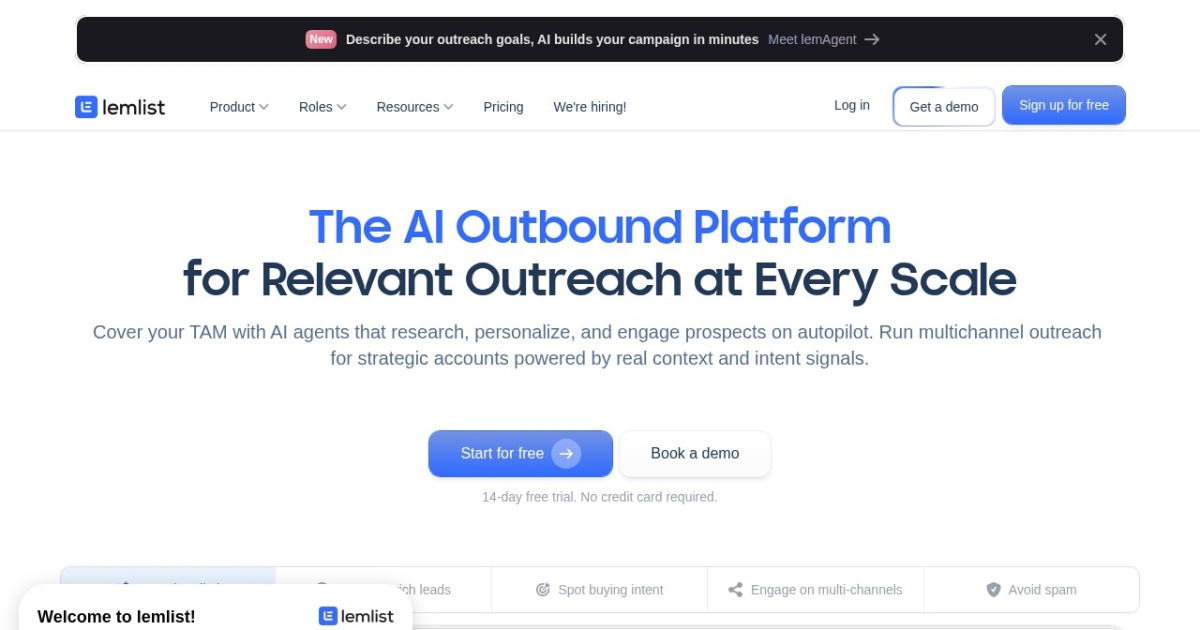
The landing page is an afternoon's Next.js work; the actual product behind it is a $50M+ ARR sales-engagement empire with a decade of infrastructure a prompt cannot touch.
You can clone the marketing page over a weekend, but not a decade of deliverability infrastructure, a 500K-follower founder-led brand, and $53M in ARR built entirely without ad spend.
Not worth cloning the full product — it's a mature, profitable ($53M ARR), well-funded-by-profit incumbent in a saturated market with 12+ credible alternatives already fighting on price; the landing page alone is trivial to clone but has zero standalone value without the sending/data backend.
Large and growing: cold outreach/sales engagement is a crowded but still-expanding category, evidenced by dozens of active competitor/alternative blog posts published in 2026 alone comparing Lemlist against a dozen+ rivals.
$500-$5,000+ depending on email sending infra, proxy/scraping for LinkedIn automation, and third-party data licensing for a lead database
A clone could monetize via per-seat SaaS subscriptions plus credit-based add-ons (email verification, phone lookups) — the same model Lemlist itself uses — but margins depend heavily on cheaply sourcing accurate contact data and maintaining deliverability, which are the hardest and most expensive parts to replicate.
Instantly.ai, Apollo.io, Salesloft, Outreach.io, Reply.io, Saleshandy, Snov.io, Salesforge, Mailshake, SmartReach, Woodpecker, SalesRobot, Amplemarket
Per-seat SaaS subscriptions (Email Pro ~$63-69/user/mo, Multichannel Expert ~$87-109/user/mo, billed annually or monthly) plus consumption-based credits for email verification (~$0.05/email) and phone lookups (~$0.20/number), with enterprise custom pricing.
Large B2B SaaS with 50,000+ customers and 10,000 free trials/month as of 2024 reporting, still growing ARR double digits year over year
- LinkedIn automation features risk violating LinkedIn's ToS (account bans)
- B2B contact database implies data-sourcing/privacy compliance (GDPR) obligations
- Trademark on 'lemlist'/'lempire' branding
- Competitive/crowded market with established well-funded incumbents
Next.js + Supabase (Postgres/auth) + Stripe for billing + a transactional email API (Postgres-backed sending queue) + Vercel hosting; LinkedIn automation would require headless browser infra (Playwright) which risks ToS violations
Vercel's Next.js SaaS starter for the marketing site; a separate Node/Express or NestJS service for the outreach engine
- 1.Fork a Next.js marketing starter and rebuild the hero, mega-menu, and pricing page from the crawled HTML
- 2.Wire Supabase auth + Postgres for user/workspace/campaign data models
- 3.Build a sequencing engine (cron + queue) that sends templated emails via SMTP providers with per-mailbox rate limiting
- 4.Integrate a third-party contact data API (e.g. via reseller agreements) instead of building your own 100M+ record database from scratch
- 5.Add Stripe billing with seat-based + credit-based metering for enrichment/verification calls
- 6.Bolt on deliverability tooling: SPF/DKIM checks, inbox warm-up rotation between dummy mailboxes
- 7.Skip LinkedIn/SMS automation initially — it's the highest legal/technical risk and lowest differentiation to build first
▸Technical evidencefacade · hidden · 7 signals · DR 77ShowHide
A prompt can nail the Next.js marketing site: hero copy, product nav mega-menu, pricing tables, testimonials, and Vimeo embeds — all fairly standard component work.
Behind the scenes is a multi-year sales-engagement platform: email/LinkedIn/SMS/call sending infrastructure, deliverability warm-up engines, a B2B contact database with hundreds of millions of records, an email finder/verifier pipeline, AI agent (lemAgent) orchestration, CRM sync integrations, and billing/credit metering — none of which is visible in the HTML.
You could build it — but that moat means you can't win. Find a better bet.
Analyze a different idea →