How is Bear - Markdown Notes built — and could you clone it?
Last analyzed 10/5/2026 · full report
https://bear.app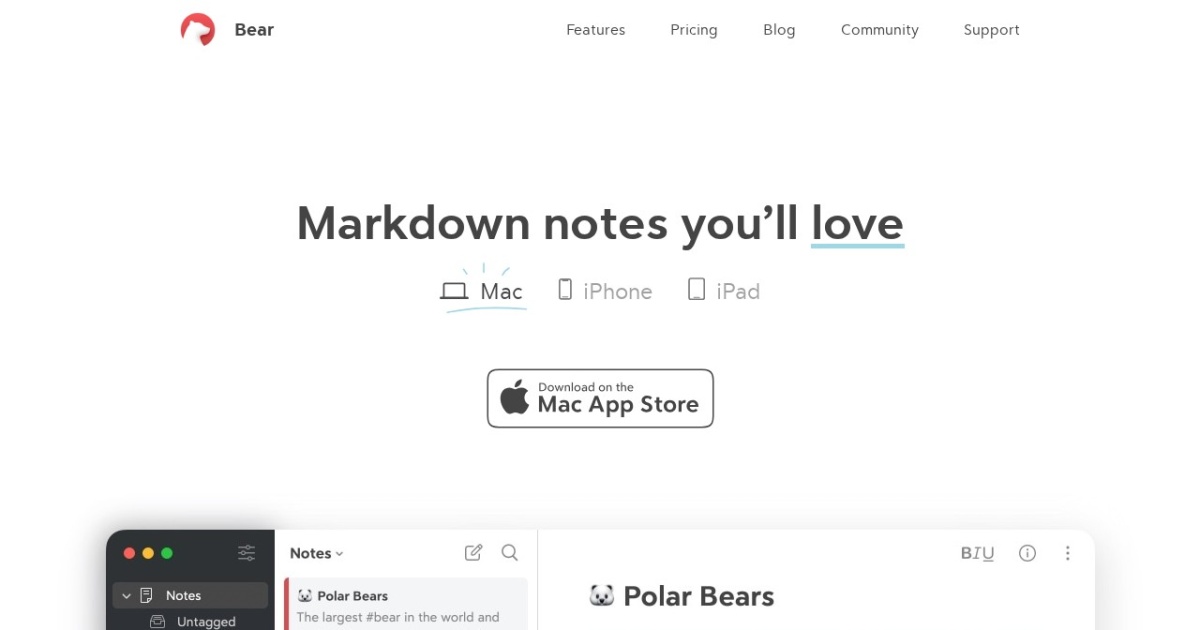
The website is a Hugo static page you could clone before lunch; the actual Bear app behind it is years of native Apple engineering that no prompt touches.
You can clone the marketing page in an afternoon, but not the design-award-winning native app, its 10-year Apple-ecosystem brand, or its App Store review base.
Cloning the marketing site is a trivial weekend exercise with near-zero running cost, but it has no standalone business value — the real product (and revenue) lives in the native apps and subscription billing that this crawl can't touch, so it's only worth it as a portfolio exercise, not a business.
Note-taking/PKM apps are a large, mature, crowded market with strong competitors spanning free-to-premium tiers.
$0-20 (static hosting + analytics) for the landing page clone
The landing page itself makes no money directly; profitability would come from replicating Bear's $2.99/mo or $29.99/yr Pro subscription model, but that requires rebuilding the entire native app and iCloud sync, not just the site.
Notion, Obsidian, Craft, Apple Notes, Evernote, UpNote, Anytype, Notesnook
Freemium native app: free local-only notes, Bear Pro subscription at $2.99/month or $29.99/year unlocking iCloud sync, themes, encryption, and extra export formats, sold via Apple's in-app purchase system.
Established, long-running app (since 2016) with a loyal niche writer/Markdown audience; traffic to the marketing site is likely modest but steady, driven by App Store discovery rather than the website itself.
- Apple App Store IAP/subscription terms govern any real monetization, not the website
- Brand/trademark: 'Bear' name and design are established and protected
- Design Award/Editor's Choice branding implies copyrighted visual assets not freely reusable
Next.js (or plain Hugo) + Tailwind CSS + Vercel/Netlify static hosting + Formspree or a serverless function for the contact form + Vimeo embed
Hugo 'bear-clone' starter or a Next.js static marketing template (e.g. Tailwind UI landing kit)
- 1.Scaffold a static site generator (Hugo or Next.js static export) and port over the hero, features, pricing, and FAQ sections as markdown/MDX content
- 2.Recreate the apps-hero toggle (Mac/iPhone/iPad) with a small vanilla JS component swapping screenshots and copy
- 3.Add Google Analytics (gtag.js) and embed the Vimeo player exactly as found
- 4.Build the /faq, /contact, /wallpapers, /privacy, /zh routes as static pages with the same content structure
- 5.Wire the contact form to a simple serverless function or third-party form handler (Formspree/Netlify Forms) since no custom backend exists
- 6.Deploy to Vercel/Netlify with a custom domain; that's the entire visible site rebuilt
- 7.(Optional, to approach the REAL product) separately scope a native SwiftUI Mac/iOS app with CloudKit sync and StoreKit subscriptions — this is the actual multi-month project, not part of the website
▸Technical evidencefacade · hidden · 5 signalsShowHide
A prompt can trivially clone this marketing site: it's a static Hugo site with a hero, pricing table, FAQ pages, a contact form, and a Vimeo embed, all stitched together with vanilla CSS/JS.
What you can't see or clone from this crawl is the actual Bear product — the native Mac/iPhone/iPad Markdown editor, its iCloud sync engine, Face/Touch ID lock and per-note encryption, PDF/image text search, and the App Store in-app-purchase subscription billing — none of which lives on bear.app at all.
Clonable and beatable — the fun kind.
Get the full build plan →