How is Auth0 (by Okta) built — and could you clone it?
Last analyzed 7/27/2026 · full report
https://auth0.com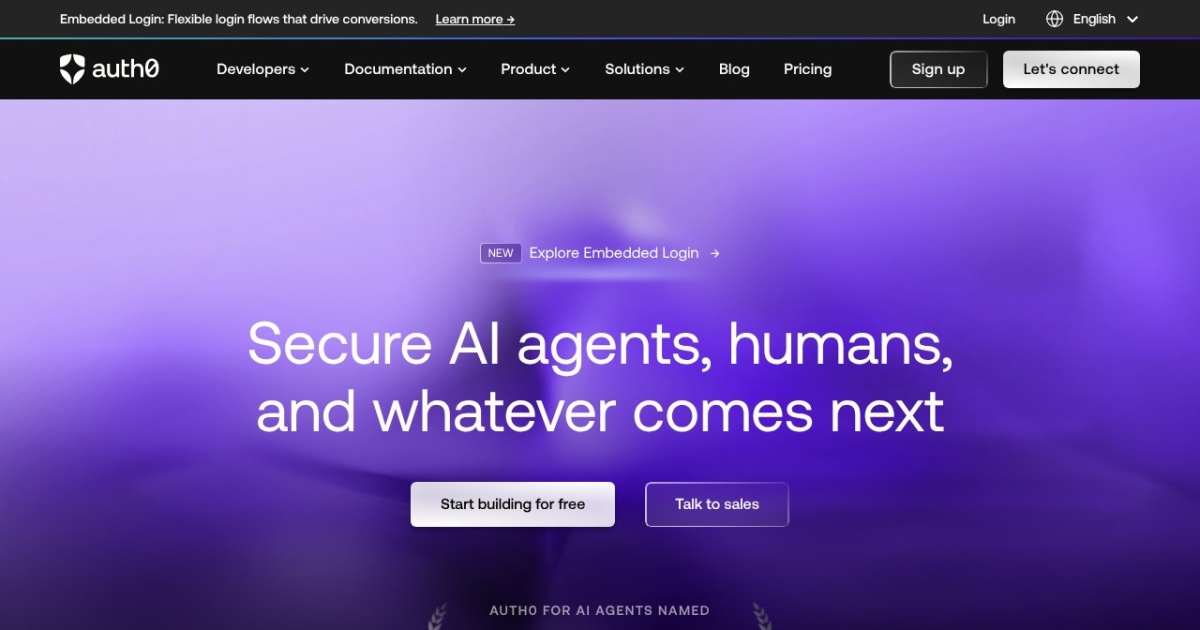
You can clone the homepage in a weekend; you cannot clone 13 years of identity infrastructure, compliance certifications, and a $6.5B acquisition's worth of enterprise trust.
The site is a weekend clone; the identity platform behind it is a decade-plus, billions-of-logins-a-month piece of critical infrastructure trusted by regulated enterprises — that's not clonable at any price.
Not worth cloning: the landing page is trivial, but the actual product is a highly regulated, deeply technical identity platform competing against Microsoft, Amazon, and Okta itself in a market where trust and compliance certifications — not code — are the real barrier.
Authentication/CIAM is a large, growing market — estimated at roughly $2.88 billion in 2026, growing at a 19.51% CAGR to reach $7.02 billion by 2031. Auth0 itself holds the #3 position in the Authentication & SSO market with a 1.22% share, trailing Azure Active Directory and Amazon Cognito, in a moderately concentrated field.
$500-5,000+ (managed auth infra, KMS/HSM, compliance tooling, support stack) scaling fast with user volume — a real clone competing on features would need continuous six-figure+ infra/compliance spend
A clone could only monetize as a usage-priced SaaS (per-MAU tiers like Auth0's own $35-$240+/mo plans), but margins are crushed by compliance/security overhead and the need to win enterprise trust — not a bootstrap-friendly business.
Okta Workforce Identity, Microsoft Entra/Azure AD, Amazon Cognito, Ping Identity, OneLogin, FusionAuth, Clerk, SuperTokens, Kinde, WorkOS, LoginRadius
Freemium usage-based SaaS: free tier up to a generous MAU cap, then paid tiers priced per monthly active user — reported around Auth0 has 5 pricing plans(s) and ranges from $35 to $240, plus enterprise custom contracts and a la carte add-ons (extra Enterprise Connections, MFA, M2M tokens).
Large enterprise-grade install base — over 14368 companies have started using Auth0 as Identity And Access Management tool as of 2026; growing steadily since Okta's 2021 acquisition.
- Regulated space: identity/auth touches security, privacy, GDPR/SOC2/FedRAMP compliance requirements
- Auth0/Okta trademark and brand protection
- Enterprise customers require security audits/certifications a clone cannot fast-track
- Massive incumbent competition (Microsoft, Amazon, Okta itself) with deep integration lock-in
Next.js (marketing site) + a real auth backend if attempting the product: Node/Go microservices + PostgreSQL + Redis + Kubernetes, OAuth2/OIDC/SAML libraries (or fork open-source Ory/Keycloak/SuperTokens/Zitadel), Stripe for billing, Vercel/AWS for hosting
For the landing page: Vercel's Next.js SaaS starter. For the actual auth engine: fork Ory Hydra/Kratos, Keycloak, or Zitadel rather than building from scratch
- 1.Clone the marketing site structure (hero, feature grid, docs nav, blog, pricing) with Next.js + Tailwind
- 2.If attempting the real product, fork an open-source IdP (Ory, Keycloak, Zitadel, SuperTokens) instead of writing OAuth2/OIDC/SAML from scratch
- 3.Stand up multi-tenant Postgres schema for users/orgs/connections plus Redis for session/token caching
- 4.Integrate social + enterprise SSO connectors (Google, Microsoft, SAML/WS-Fed) and MFA/passwordless flows
- 5.Add a rules/actions engine for custom login-flow logic (JS sandbox execution)
- 6.Build usage-based billing (Stripe metering) tied to MAU tiers, plus admin dashboard and audit logging
- 7.Pursue SOC2/ISO27001 compliance and pen testing before any enterprise customer will trust it
▸Technical evidencefacade · hidden · 13 signals · DR 90ShowHide
A prompt can rebuild the Next.js marketing site — hero copy, feature grids, docs nav shell, blog listing, pricing table layout — in an afternoon of iteration.
Behind the marketing shell sits a globally distributed, SOC2/ISO/GDPR/FedRAMP-audited identity platform handling billions of logins/month: multi-protocol auth (OAuth2, OIDC, SAML, WS-Fed), MFA, passwordless, thousands of social/enterprise IdP integrations, rules/actions engine, anomaly detection, extensive docs/quickstart infrastructure (Mintlify-powered), and enterprise billing/support systems (Intercom/Zendesk, CRM, observability).
You could build it — but that moat means you can't win. Find a better bet.
Analyze a different idea →