How is Airbnb built — and could you clone it?
Last analyzed 7/14/2026 · full report
https://airbnb.com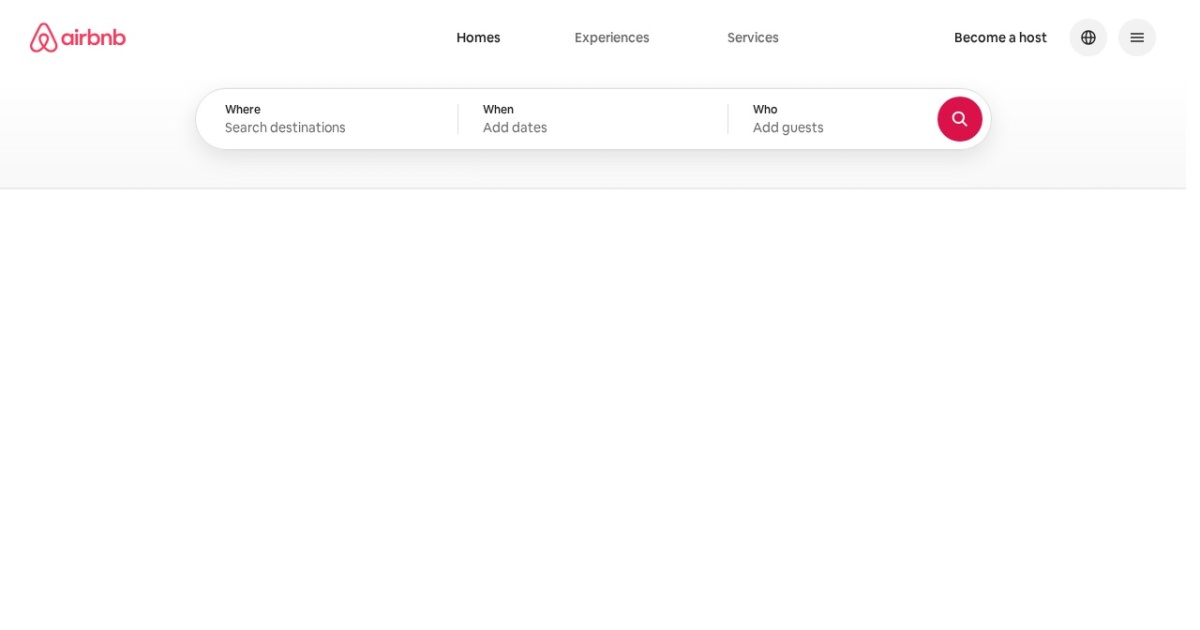
You can clone the homepage in a weekend; you cannot clone 19 years of trust, liquidity, and a global host network worth tens of billions in bookings.
You can clone the search bar in an afternoon, but not the 8 million active listings, 19 years of reviews, or the two-sided liquidity that makes hosts and guests show up in the first place.
Not worth cloning as a competitor to Airbnb itself — the landing page is trivial to prompt, but the business is a 19-year-old, multi-billion-dollar, regulation-heavy global marketplace with immense network effects; a clone with zero hosts and zero trust has no product. It's only 'worth building' as a portfolio/demo project or as a narrow vertical niche (e.g., a local Hipcamp-style niche marketplace), not as an Airbnb competitor.
Massive and growing: global short-term rental revenue was estimated near $183B in 2024, with Airbnb alone commanding roughly 44% of that market and generating over $12B in annual revenue.
$500k+ at meaningful scale (infra, payments processing, support, trust & safety, compliance)
Airbnb monetizes via a marketplace take rate — hosts now pay a single ~15.5% service fee on bookings — plus Experiences/Services commissions; a clone would need genuine two-sided liquidity (real hosts + real demand) before any commission model generates revenue, which is the actual hard part, not the code.
Vrbo/Expedia Group, Booking.com, Tripadvisor, HomeToGo/Tripping.com, Plum Guide, Marriott Homes & Villas, Hilton Apartment Collection
Two-sided marketplace take rate: hosts pay a single ~15.5% service fee on the booking subtotal (as of 2025), plus separate commissions on Experiences and Services bookings; guests previously paid a separate service fee under the old split-fee model.
Extremely high — hundreds of millions of monthly visits globally; flat-to-growing, with 2025 revenue of $12.2B, up 10% YoY, and 121-143M nights/experiences booked per quarter.
- Trademark/brand infringement (Airbnb name, trade dress)
- Short-term rental regulation varies heavily by city/country (permits, zoning, hotel taxes)
- Payment processing/money transmitter licensing requirements for a global payments/payout system
- Trust & safety liability (guest/host safety incidents) requiring insurance and legal infrastructure
- Data/IP scraping of listings would violate ToS
Next.js (App Router) + Postgres/PostGIS (Supabase or RDS) for geospatial listing search + Stripe Connect for split payments/payouts + Auth0 or Supabase Auth with OTP/2FA + Elasticsearch/Algolia for search + Google Maps API + S3/Cloudflare Images for media + Redis for session/cache + a background job queue (BullMQ) for booking workflows
Vercel Next.js SaaS starter or a marketplace boilerplate (e.g. 'Sharetribe' open-source marketplace kit) as a base to fork instead of building a marketplace from scratch
- 1.Stand up listing CRUD + PostGIS-backed geo search with map/list toggle view mirroring /homes
- 2.Build auth: email/phone OTP signup-login flows matching /api/v2/auth_flows and /api/v2/phone_one_time_passwords patterns
- 3.Integrate Stripe Connect for host payouts and guest checkout with escrow-style hold-until-checkin logic
- 4.Add booking/availability calendar engine with double-booking prevention (core marketplace complexity)
- 5.Layer reviews, messaging (host<->guest), and a trust/verification (ID check) flow
- 6.Build a lightweight CMS (Sanity/Contentful) for Help Center, gift cards, and marketing content routes
- 7.Add observability (Sentry/Bugsnag) and CAPTCHA/bot protection (hCaptcha) on auth endpoints
▸Technical evidencefacade · hidden · 7 signals · DR 92ShowHide
A prompt can recreate the visual shell — hero search bar, category tabs (Homes/Experiences/Services), listing card grids, and responsive layout — as static/mock-data pages.
Behind the facade sits a global two-sided marketplace: real-time inventory/pricing engine, geospatial search, payments/payouts in 190+ countries with tax and currency handling, identity verification, trust & safety/fraud systems, messaging, reviews, dispute resolution, and a CMS-driven multi-locale content platform — none of which is visible in the crawl.
You could build it — but that moat means you can't win. Find a better bet.
Analyze a different idea →